Attack Analysis
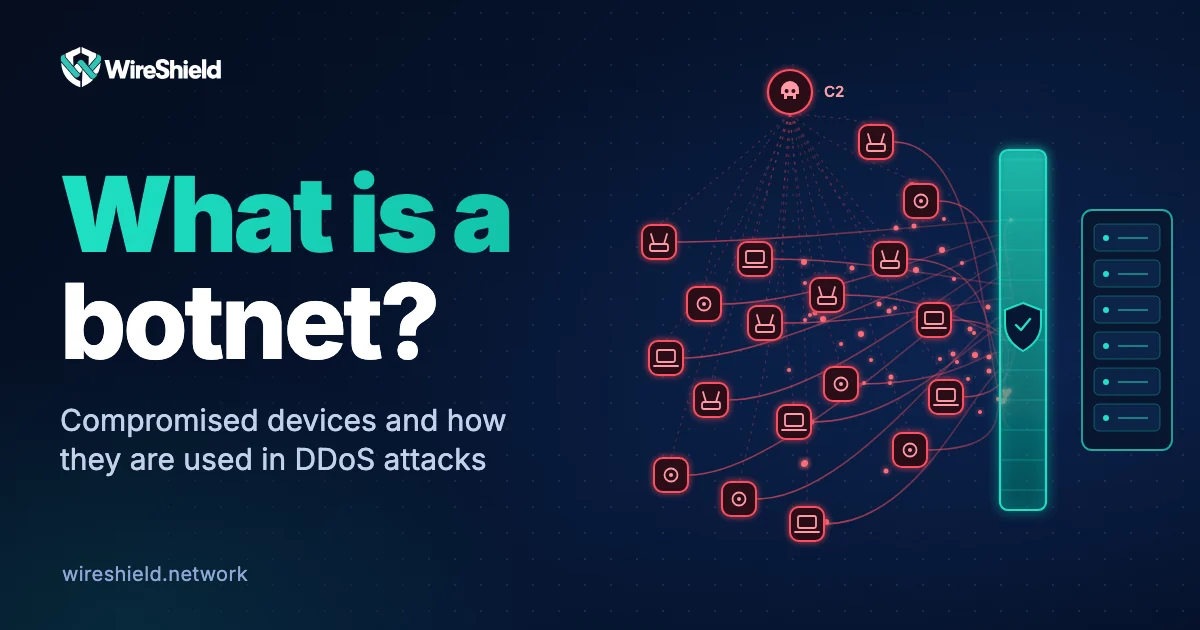
What is a botnet? How it works and how it is used in DDoS attacks
 WireShield Team · 6 min read
Read post


Attack Analysis
A DDoS attack makes a service unreachable by flooding it with traffic from thousands of devices. Learn how it works, the main attack types, warning signs and protection options.
WireShield Team
6 min read
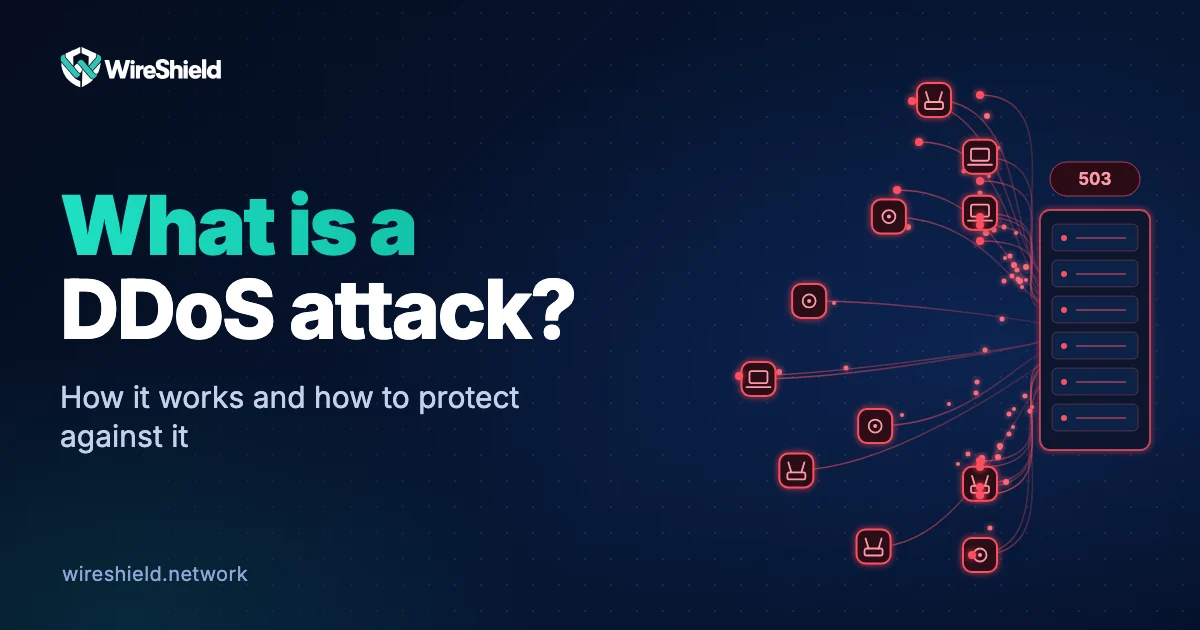
A DDoS (distributed denial-of-service) attack tries to make a system or network unreachable for real users by overwhelming it with traffic from many devices at once. The US cybersecurity agency CISA describes denial-of-service attacks as a malicious actor preventing legitimate users from accessing an information system. This guide answers what a DDoS attack is, how it works, how to recognise one and how to protect against it.
The goal of a DDoS attack is to exceed the capacity of a server, an application or an internet connection. Capacity can run out in three places: the link's bandwidth, the packet-processing power of network devices and servers, or the request-handling capacity of the application. Once one of them is full, legitimate visitors cannot reach the service either.
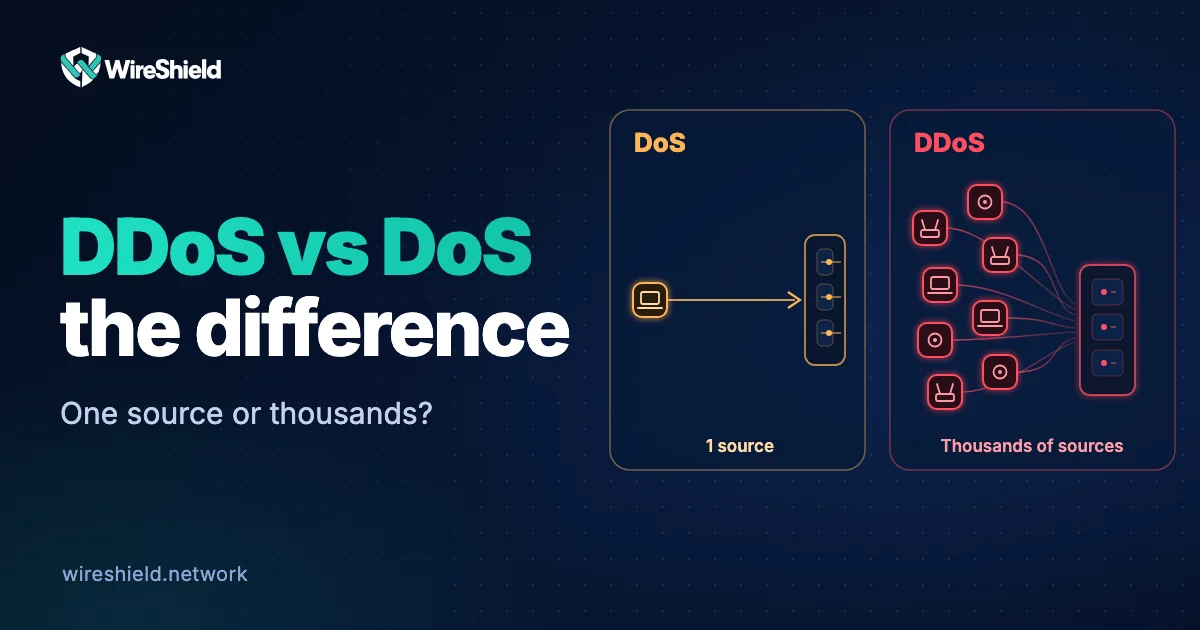
"Distributed" means the traffic comes from many devices on many networks rather than from one source. That makes defence harder, because blocking a single IP address does not stop the attack. We cover the difference to a single-source attack in DDoS vs DoS.
Most DDoS attacks follow the same three steps:
Some attacks do not even need the attacker's own devices. In reflection and amplification, the attacker sends small requests with the victim's address as the spoofed source to open DNS, NTP or memcached servers, which then send much larger responses to the victim. According to the table published by CISA, the amplification factor is 556.9 for NTP, 28 to 54 for DNS and 10,000 to 51,000 for memcached.
Attacks fall into three groups depending on what they exhaust:
| Group | What it exhausts | Examples |
|---|---|---|
| Volumetric | Link bandwidth | UDP flood, ICMP flood, DNS and NTP amplification |
| Protocol | Connection and packet-processing capacity of devices | SYN flood, ACK/RST flood, fragmented packet attacks |
| Application layer | Request capacity of the web server or application | HTTP flood, slow request attacks, HTTP/2 Rapid Reset |
We explain how each type works, how it shows up and how it is defended in types of DDoS attacks. In practice, attackers often combine several methods at once; this is called a multi-vector attack.
None of these signs is proof on its own, but together they point to an attack:
We describe which data to watch in the UDP flood monitoring guide and how to read the result in reading an attack report.
Effective protection comes from layers, not a single tool:
Yes. Launching a denial-of-service attack against a system without permission is a crime in most countries. Using services sold as "stressers" or "booters" falls under the same rule.
Usually not. The goal is to interrupt the service, not to take data. However, some attacks are used as a smokescreen to distract the security team from another intrusion.
Yes. Attacks do not only target large companies; small services are hit by competitors, for revenge or for extortion. Automated tools keep the cost of an attack low.
From minutes to days. A single intense wave can last a few minutes, as in the GitHub case, while other attacks come back in waves over a day. Duration depends on the attacker's goal and the effectiveness of the defence.
A network or server firewall alone cannot stop a volumetric attack, because the link is full before the traffic reaches the firewall. That is why filtering has to happen in front of the link.
Let us assess together how much risk you have at each layer. Describe your network, prefixes and web applications, and we will suggest the right protection model. You can talk to the technical team.
Attack Analysis
WireShield Team · 6 min read
Read post
Attack Analysis
WireShield Team · 6 min read
Read post
Contact our team to talk through your technical needs.