Technical Guide
How does remote DDoS protection work?
Remote protection sends your traffic through the WireShield filtering network first, without moving your servers. See how BGP routing, GRE delivery and the setup requirements fit together.
WIRESHIELD BLOG
Technical notes on DDoS protection, network operations and WireShield.
Technical Guide
Remote protection sends your traffic through the WireShield filtering network first, without moving your servers. See how BGP routing, GRE delivery and the setup requirements fit together.
Product Update
Network Operations
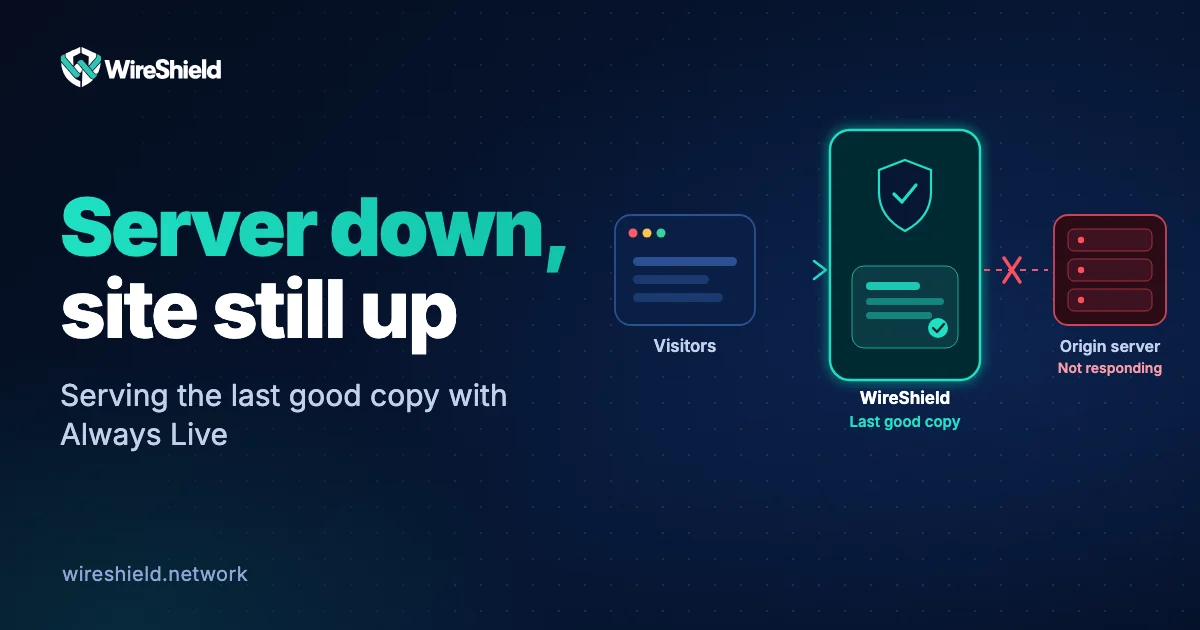
When your origin server stops responding, visitors can see the last good copy of each page instead of an error. Learn how it works, its limits and how to set it up.
Technical Guide
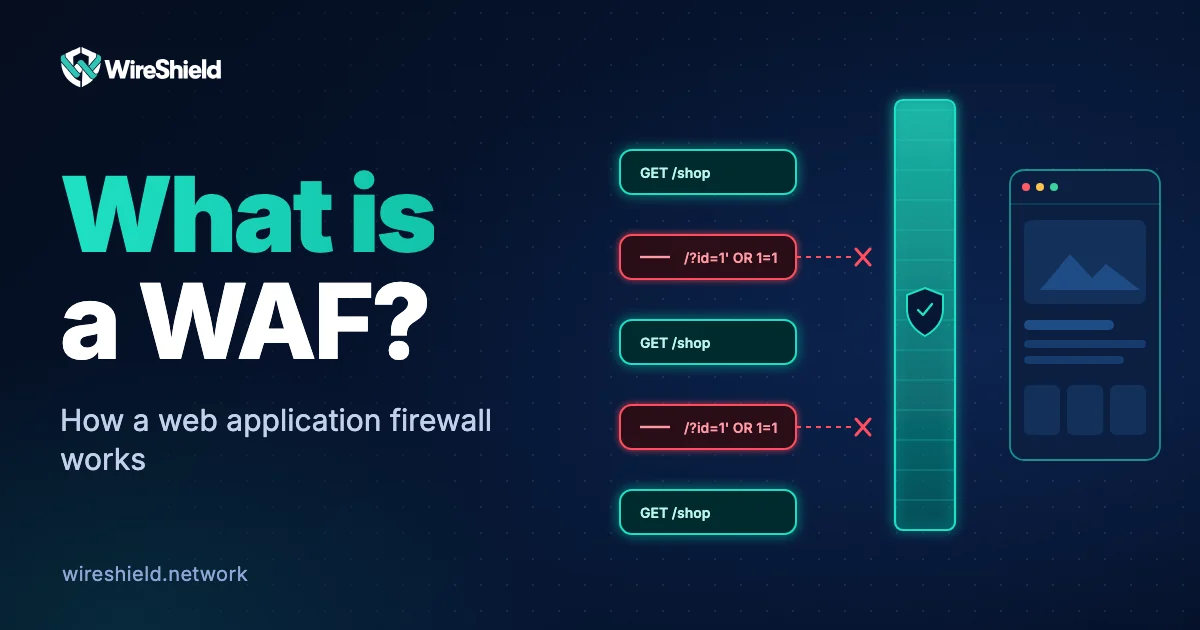
A WAF inspects the HTTP requests sent to your web application and blocks harmful ones. Learn how it works, how it differs from a firewall, what it protects and how to choose one.
Attack Analysis
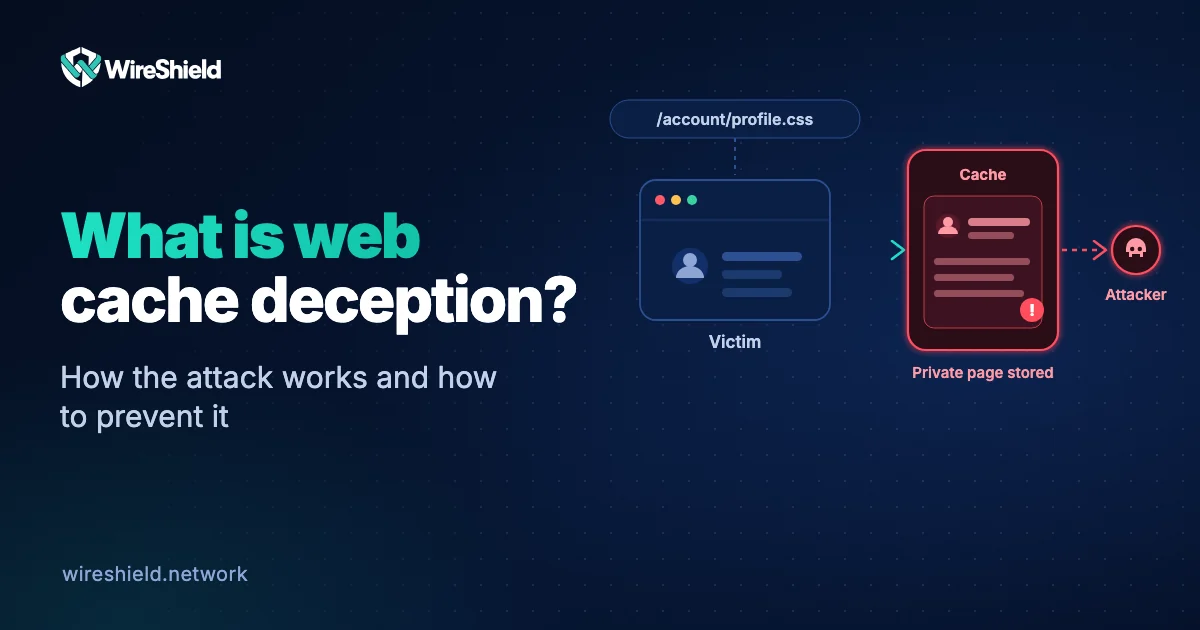
Web cache deception tricks a cache into storing a private page as if it were public. Learn how the attack works, a real example and how to protect your site.
Attack Analysis
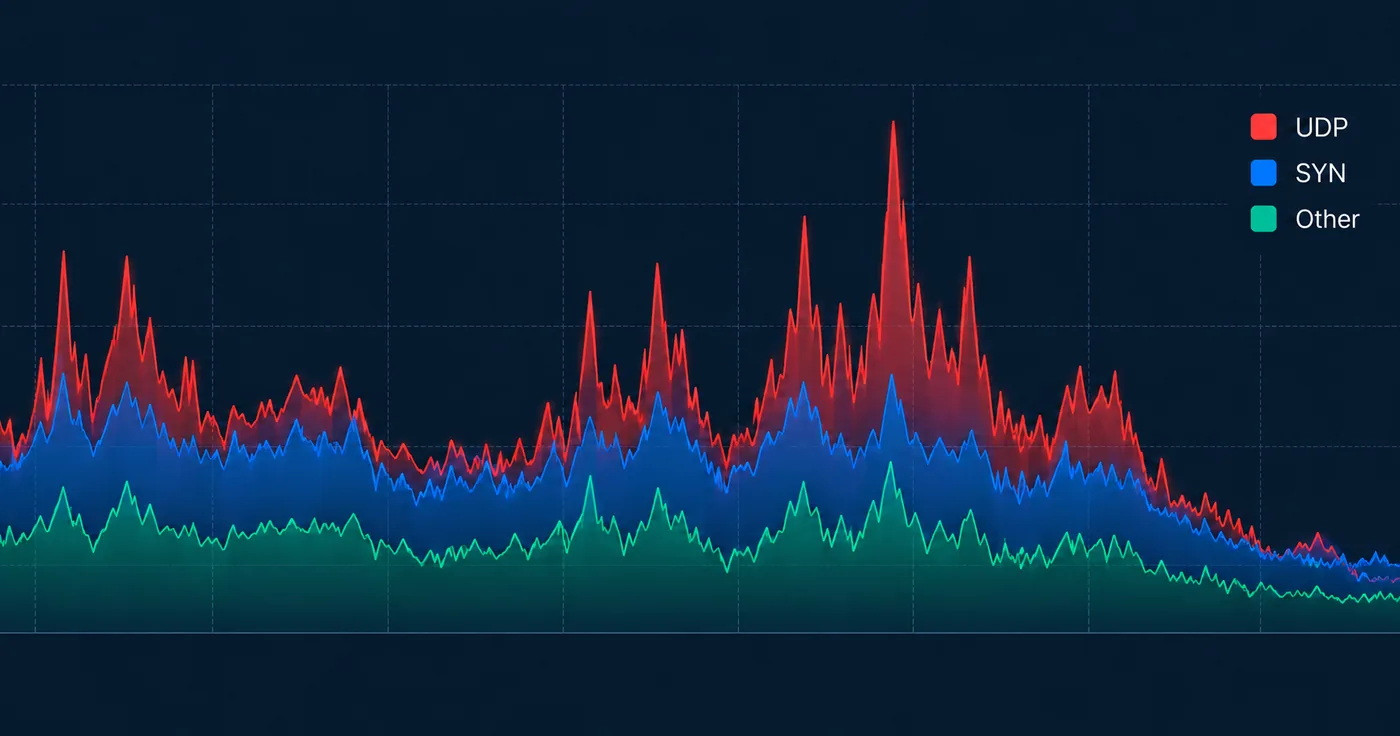
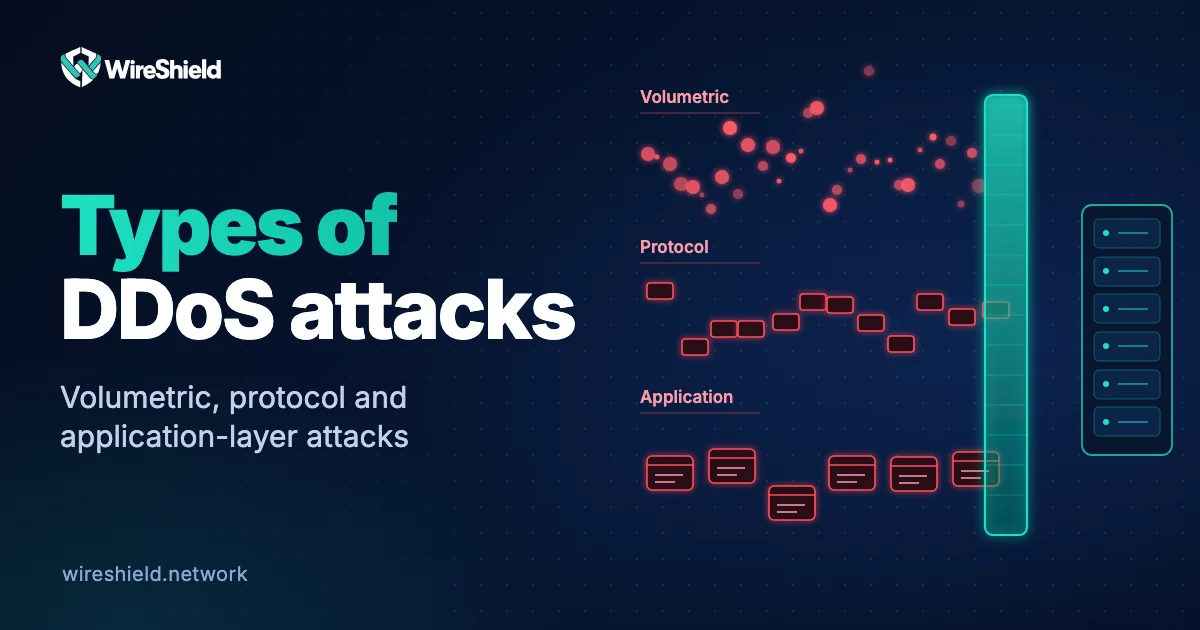
Compare UDP flood, SYN flood, DNS amplification, HTTP flood and Rapid Reset: how each DDoS attack type works, how it shows up and how it is defended, in one place.
Technical Guide
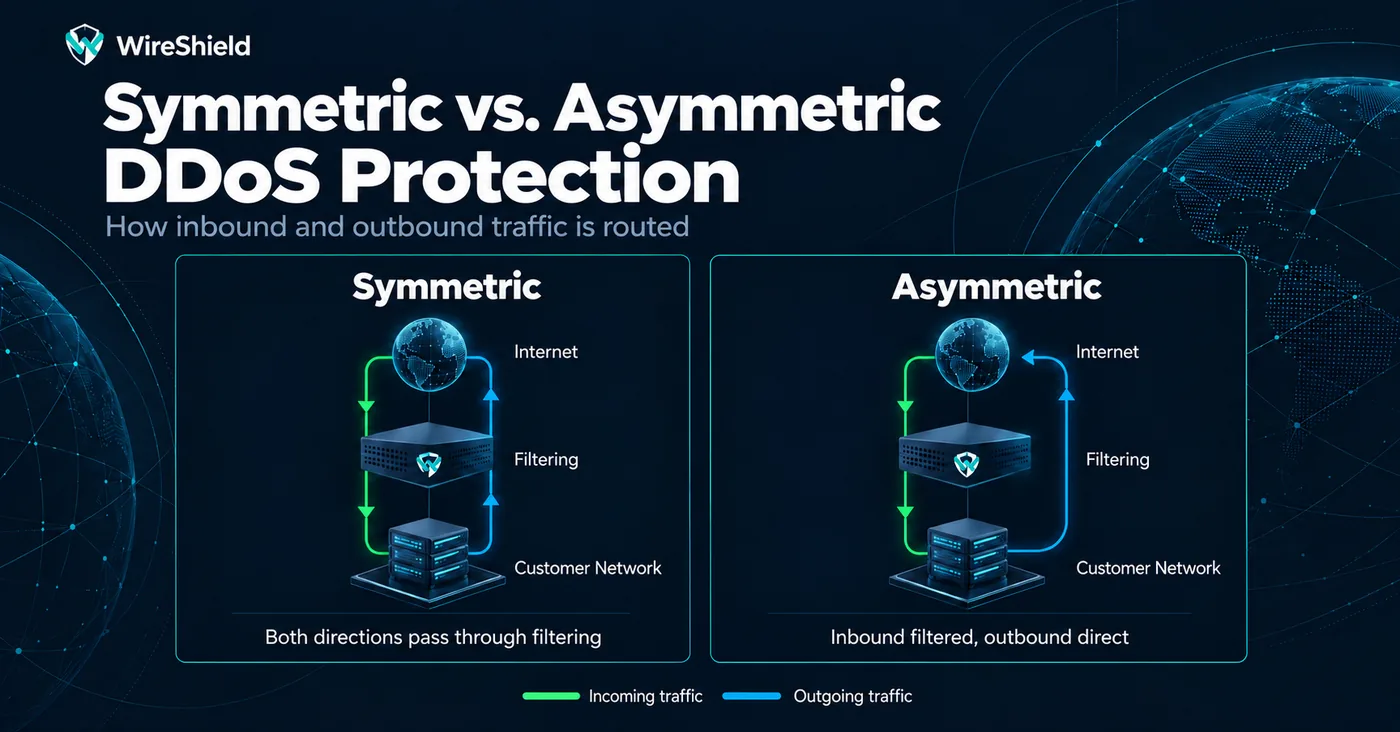
With symmetric protection reply traffic also passes through the filtering layer; with asymmetric protection only inbound traffic is filtered. Learn the differences, the trade-offs and how to choose.
Contact our team to talk through your technical needs.