Technical Guide
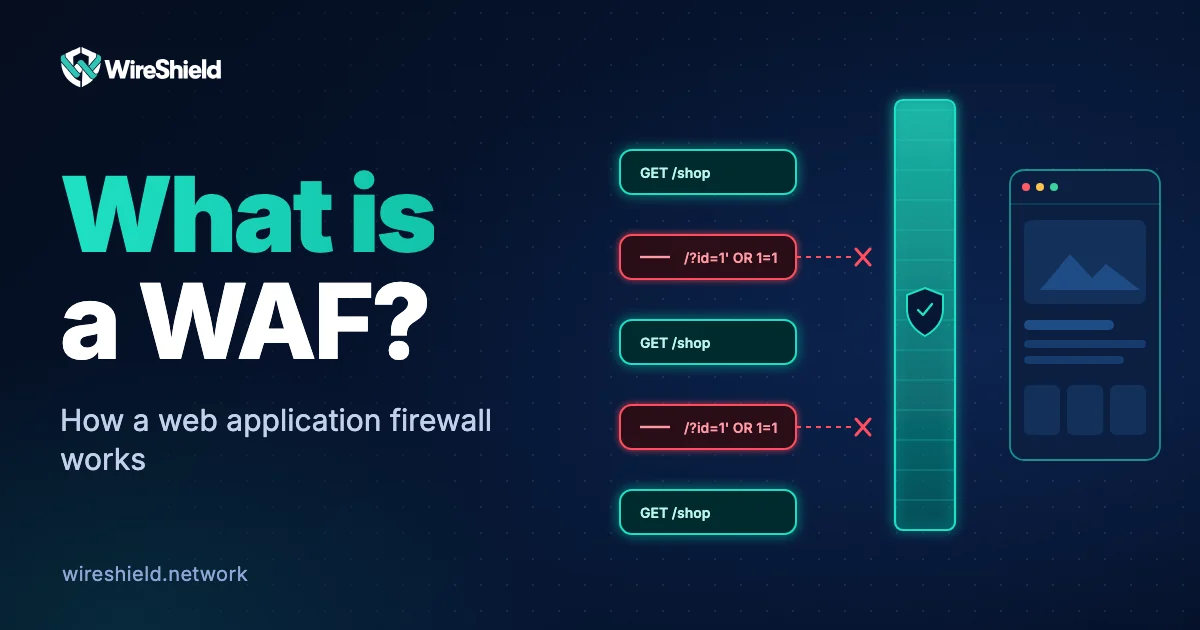
What is a WAF? How a web application firewall works
 WireShield Team · 7 min read
Read post


Technical Guide
Anti-DDoS is a protection system that detects attack traffic, filters it and forwards only clean traffic to the target. Learn how it works, the solution models and the selection criteria.
WireShield Team
6 min read
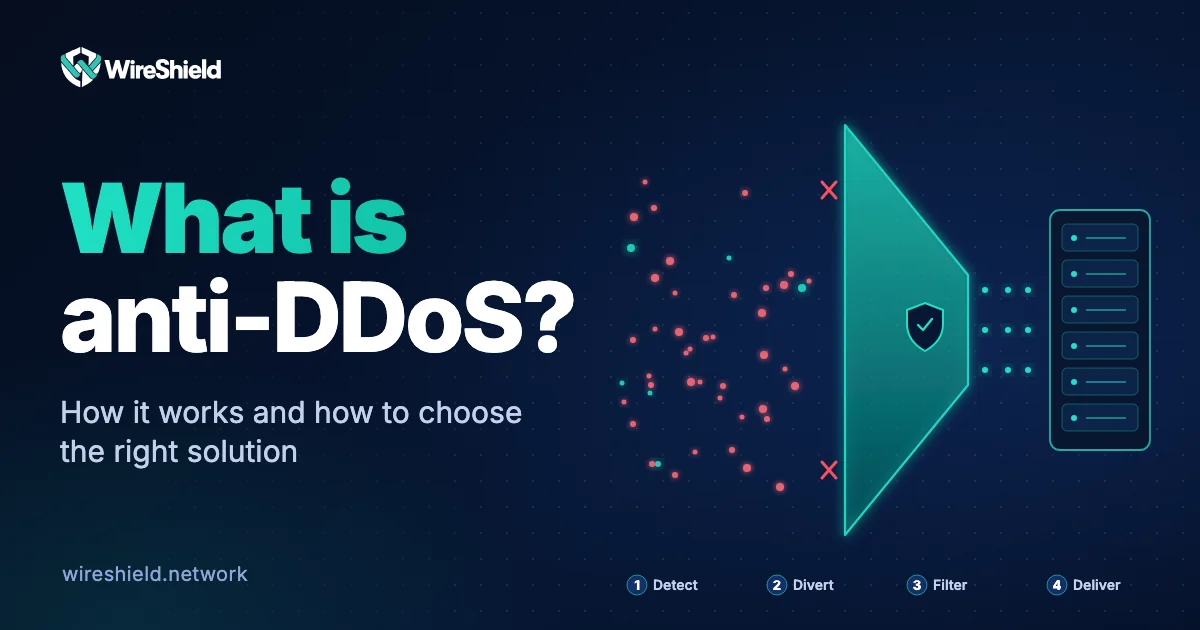
Anti-DDoS is the name for protection systems that detect distributed denial-of-service attacks, filter the attack traffic and forward only legitimate traffic to the target. It is also called "anti-DDoS protection", "DDoS mitigation" or "DDoS scrubbing". The goal is to keep the service available to users even while an attack is under way. This guide answers what anti-DDoS is, which steps it goes through, which solution models exist and what to look for when choosing. You can read about the attack itself first in what is a DDoS attack.
An anti-DDoS solution is a layer where traffic is analysed before it reaches the target and the part classified as attack is dropped. Its difference from a network firewall is that it can handle volumetric and protocol attacks in front of your link or at the network edge, at very high packet rates. We explained why a firewall alone is not enough in what is a firewall.
Most solutions work in four steps:
In WireShield protection profiles these filters work together:
You can find how these filters work in detail in rules, lists, GeoIP and threat intelligence in the documentation.
| Model | How it works | Who it suits |
|---|---|---|
| Remote (off-site) | Traffic is routed over BGP to the filtering network and the clean part returns to you | Those who want to keep their current data center and prefixes, and those with high volumetric risk |
| Inline (network edge) | The appliance sits between the uplink and the internal network and filters on site | Those who want traffic to stay inside their network |
| Web (L7) protection | DNS is pointed to the service; a WAF, rate limiting and challenge pages filter HTTP traffic | Websites, APIs, customer portals |
To decide, see inline or remote. The models can be planned together; we decide in the technical discussion which traffic is filtered where. WireShield's three protection models are described on the remote protection, WireShield Edge and Web Protection pages.
A firewall allows or blocks traffic according to rules and fails once the link is full. Anti-DDoS is designed to filter attack traffic at high speed in front of the link or at the edge.
Because traffic passes through a filtering network, a very small delay may be added. That effect cannot be compared with the service being completely unreachable under attack.
Always-on protection reacts to an attack immediately; on-demand protection only starts when needed. We decide together in the technical discussion based on your risk profile.
Remote protection works with your own ASN and prefixes over BGP. If you have no ASN, describe your situation and we will evaluate the options together. Inline protection does not require an ASN.
Yes. Application-layer attacks such as an HTTP flood also need a WAF and rate limiting, which Web Protection provides.
Describe your network, prefixes and web applications and we will suggest the anti-DDoS model and connection method that fits. You can look at the services on the WireShield home page or talk to the technical team.
Technical Guide
WireShield Team · 7 min read
Read post
Contact our team to talk through your technical needs.